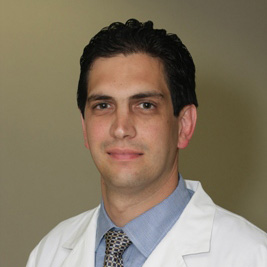

I’m writing this not to talk about myself but because I think it can help my patients in terms of mindset and approach to staying active!
Unfortunately, I’ve been an orthopedic patient from an early age (these experiences helped to shape my interest and pursuit of Orthopedics.) Throughout the years, I have had to adapt my fitness level and activities in order to do what I love and what excites me while keeping my joints healthy. My recommendations are built on professional understanding and personal experience.

In my adult life, my goals have been to stay active, control my body weight (in the last 15 years especially), and participate in sports. Participating in sports is what I really love, and the rest is “no fun”. The first 30 years of my life were focused heavily on playing sports, specifically basketball and soccer. I simply couldn’t get enough of it. My favorite class every year that I was in school was gym class. I’ve tried just about every sport, including jai alai!
My First Pivot: Hitting 30
My first activity pivot occurred in my early 30s, as I realized that, as a surgeon, I probably shouldn’t be playing basketball. I had an injury to my small finger as a child, and I would easily jam it when playing basketball. That jam created pain and swelling of my finger, to the point that it would be difficult to get surgical gloves on and off. So, I decided to stop playing basketball and focus on soccer. Soccer was a real passion in my 30s and up to my late 40s. Alas, it was also during this time that my orthopedic problems multiplied. By the time I stopped playing soccer, both of my Achilles and my knee were very painful, I had undergone lumbar spine surgery and arthroscopic knee surgery, and my back was hurting consistently enough that I was genuinely concerned. My long-term well-being was at risk.
My Second Pivot: Too Much Pain
To limit or avoid sports injuries, I transitioned to the gym, doing weightlifting and cardio. BORING! I stuck with it for a couple of years, but I was working up my New Year’s resolution at the end of 2024, I realized that I really wanted to return to participating in sports.
To find a safe and interesting sport, I searched the internet for a list of sports. The list was long: I was excited to see water polo among the options. I frequently encourage my patients to do aquatic therapies, so I began to explore water polo, although I’ve never played it ever in my life! I was certainly happy to adjust and try something new. However, water polo in the Atlanta Metro area was nowhere close to my work or home. I was unwilling to travel 45-60 minutes to get in a workout.
Back to the list.
At the bottom of that list was hockey. I played hockey until I was nine years old, but had not thought about the sport in at least 30 years. Filled with fun memories, I decided to give hockey a try again.
It ended up being a huge blessing for me. I really enjoy hockey, and I have relished this new challenge and change in my life. Yes, I’m essentially a 50+ year-old beginner. I’m in over my head for sure, but the workout is great and no checking is allowed, so I’ve suffered no serious injuries.
Finding the Right Fit for You
So what’s the message? Be creative and try new things. Be thorough in discovering your interests. Try aquatic exercise (they sell waterproof headphones by the way), or place a TV in front of your stationary bike at home. Think out-of-the-box a bit to see what you might like. Maybe you can discover a new passion – or rediscover an old one, as in my case.
As an arthroscopic surgeon, it is difficult for me to prescribe a blanket fitness plan or activity for my patients as they bring varying histories and motivations. When I suggest that running may be difficult or too stressful for aging bodies over the long-term, I get reactions as varied as “I hate running anyway” or “I’ll do anything – including surgery – to be able to keep running.” This is an important example of how patients differ. As a doctor, I work hard to maintain sensitivity to my patients’ desires and try to accommodate them when offering medical guidance. With all things, understanding your options and goals is important when trying to make the best decision for yourself.
Isn’t Surgery Always the Best Option?
Over the years, I have been asked more times than I can count, “Couldn’t you just have gotten all those orthopedic problems fixed? You are an orthopedic surgeon with so many connections!” Although there is truth to that, surgery doesn’t guarantee recovery and it doesn’t make you new again. Restoring articular cartilage to the knee may help with knee pain, but it doesn’t last forever. The spinal fusion that I underwent helped significantly, but it adds stress to the adjacent areas of my spine, which likely could fail over the long-term. To continue land-based sports, I would probably need two Achilles surgeries. In light of all of these orthopedic problems, adjusting to a new sport that had a completely different set of stresses on my body was the best choice for me.
I hope that you have found this helpful, and that you come away with the understanding that my doctor understands this problem better than I thought because I have lived it!