

 Foot + Ankle Problems + Treatments
Ankle Ligament Reconstruction: What is it?
For Ankle Instability and Ankle Sprain
Twisting injuries can tear the ligaments in the ankle. If the ligaments do not heal properly, the ankle may become unstable, which manifests as painfulness and repetitive twisting injuries. With each additional sprain, the ligaments of the ankle can become increasingly loose or dysfunctional, causing chronic pain and twisting episodes. This injury can also lead to other injuries such as ankle cartilage defects, ankle impingement, and tendon tears. If pain persists despite physical therapy, bracing, medication, and activity modification, surgery may be a good option to help in the short and long term.
Office Appointments and Telemedicine with Dr. Carreira

You can also book an office appointment or a telemedicine visit by calling Dr. Carreira’s office at 404-355-0743. Book now.
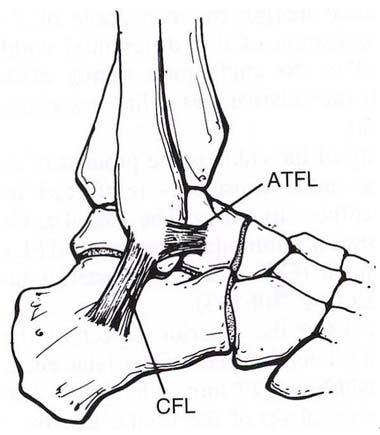
These two ligaments of the lateral ankle are the most frequently injured in the human body. The modified Brostrom technique includes direct anatomic repair of these ligaments. Very small anchors may be drilled into the bone as needed for additional strength. The retinaculum also is incorporated into the repair for additional repair strength.
Several surgical procedures can repair or reconstruct damaged ankle ligaments. Different methods have been studied to compare strength and stability, which are shown below.
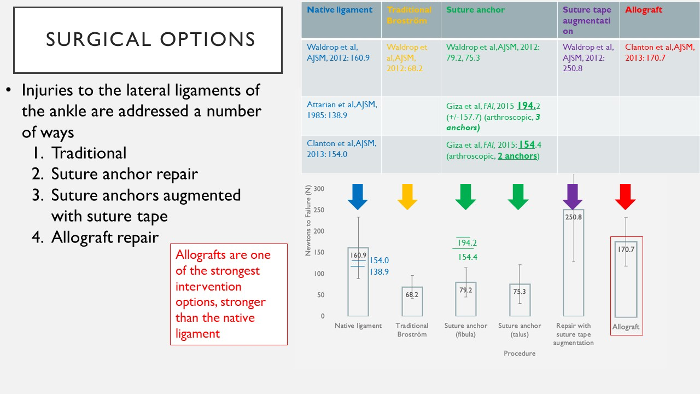
The diagram above shows that using three anchors gives more stability than using two anchors. Dr. Carreira often uses three anchors in patients with weaker tissue or many previous sprains.
Video Demonstrating Ankle Instability
In the video above, Dr. Carreira demonstrates ankle instability while the patient is under anesthesia. The ankle moves more than normal before surgery.
Better Medical Outcomes: Three-Anchor Arthroscopic Repair of Ankle Instability
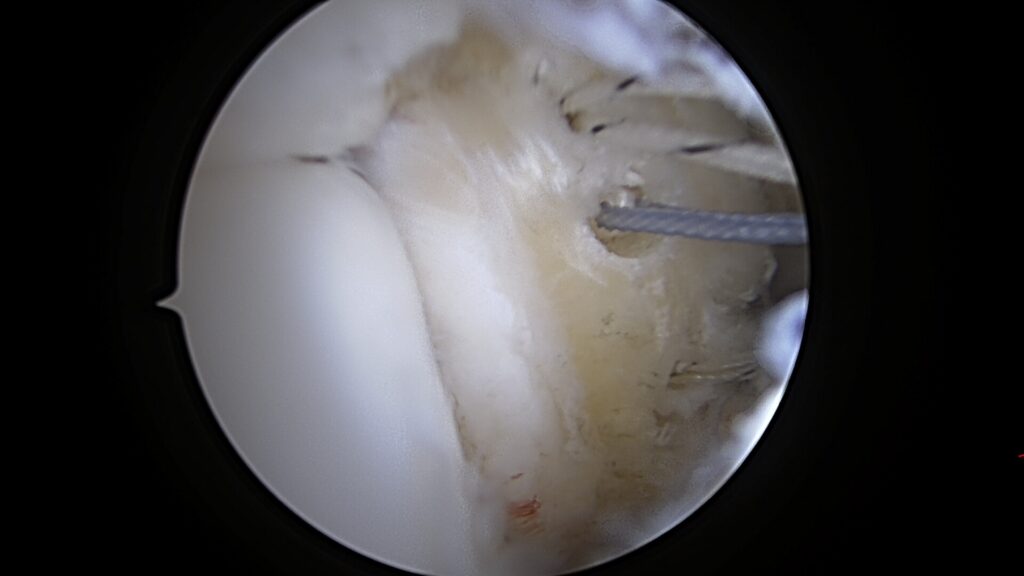
Research studies have shown that three anchors may provide better stability than two anchors during ankle ligament repair surgery.
The three-anchor arthroscopic procedure is technically difficult, but Dr. Carreira is committed to providing the best outcomes for his patients. When necessary, Dr. Carreira has successfully performed the three-anchor procedure in many instances.
All Arthroscopic Repair for Ankle Instability
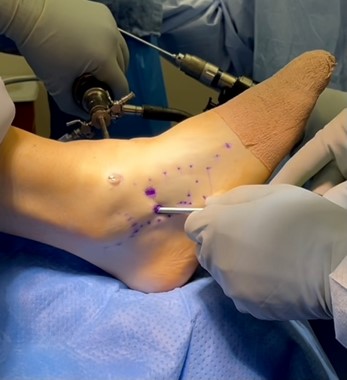
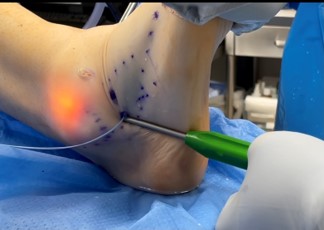
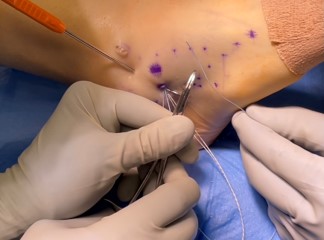
Arthroscopic ligament repair is a minimally invasive surgery that uses small cuts (3-4mm) and a camera to repair the ligaments using anchors, sutures, and stitches.
After Surgery Recovery Course for Ankle Instability
- A tall CAM boot is worn immediately after surgery.
- Partial weight bearing is allowed during the first week.
- Full weight bearing usually begins after one week.
- Gentle ankle movement (dorsiflexion and plantar flexion) starts at two weeks after surgery.
- Patients slowly stop using the boot around six weeks after surgery.
- An ankle brace is often worn for at least six months and while playing sports long term.
- Return to sports is usually planned around three months after surgery.
Open vs. Arthroscopic Reconstruction with Cadaver Grafting
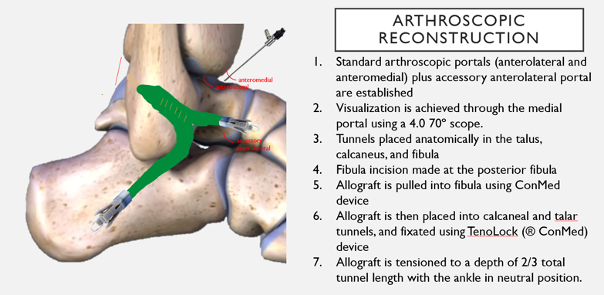
Some patients may need reconstruction instead of repair because of loose joints, higher body weight, high activity levels, or previous surgeries. More recently, Dr. Carreira is one of the few surgeons internationally who performs minimally invasive arthroscopic ligament reconstruction using donor tissue. This is less invasive and leads to less complications, less scarring, and less pain when compared to an open procedure. Dr. Carreira will consider all of these factors in his evaluation of what treatment is right for you.
Arthroscopic Reconstruction
After Surgery Recovery Course for Ankle Instability
Day of Surgery
- A bunkly plaster splint is placed
- Ice, elevate, and take pain medication
- Bloody drainage through the splint is expected
- Do not remove the splint, but you may add additional ACE wrap bandage
Days 3-5
- First visit back to the office
- Change dressings and place in a short leg cast
- Partial weight bearing is permitted
- Elevate the leg regularly to prevent swelling and wound problems
Weeks 2-3
- Sutures are removed
- CAM boot is paplied
- Weight bearing in the boot as tolerated
- The boot may be removed for showering, but no bathing isa allowed until the wound is completely healed
- Start ankle up and down motions (dorsiflexion and plantarflexion only) while avoiding hell side-to-side motions
- Formal physical therapy may be started or delayed until 6 weeks post surgery
6 Weeks
- The CAM boot is weaned to a sneaker-like shoe
- Tie up ankle brace is worn for support for a minimum of 6 months
Return to sport typically occurs between 3 and 6 months after surgery, depending on the procedure and any associated injuries at the time of surgery.